




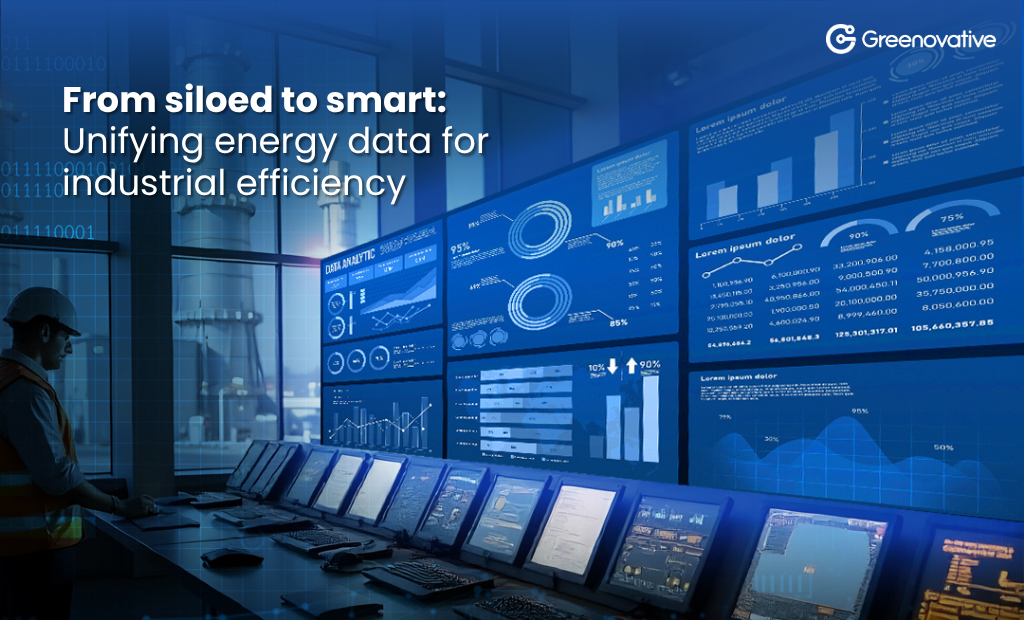
From Siloed to Smart: Unifying Energy Data for Industrial Efficiency

In most manufacturing facilities, data is both abundant and fragmented. Critical information flows in from numerous systems, yet it rarely flows together. On the shop floor, real-time data is captured through SCADA, DCS, MES, and CMMS platforms. Meanwhile, business and finance teams rely on ERP systems, utility billing portals, and cost center reports to track energy spending. At the same time, sustainability teams access emissions monitors and regulatory reporting tools to manage compliance.

Each of these systems serves a vital purpose, but they operate in isolation, creating data silos across departments. The result is a disjointed landscape where teams speak different “data languages,” making it difficult to form a complete, accurate view of energy performance or make coordinated, timely decisions.

Breaking Data Silos in Manufacturing

In the manufacturing industry, a major challenge in effective data management stems from the existence of data silos, isolated pockets of information that remain disconnected across departments. On the shop floor, operational technology (OT) systems like SCADA, DCS, and IoT devices generate vast amounts of valuable real-time data. Meanwhile, business, energy, and sustainability teams often rely on fragmented reports from Excel sheets or ERP systems for performance insights. Because these systems operate in isolation, teams struggle to make sense of the bigger picture when issues arise.

When a sudden energy spike occurs during production, no one can immediately explain why. Was it due to equipment inefficiency, a process anomaly, or an operational oversight? Without a unified view, diagnosing the root cause becomes a daunting task. This fragmented approach to data management is not just inefficient, but costly as well. For modern manufacturers under pressure to cut energy costs, boost productivity, and meet decarbonization goals, the chaos of siloed systems is a major roadblock to progress. Understanding where these silos exist is the first step toward solving the problem.

  1. Operational/Shop Floor Data

This data is generated by systems like SCADA, DCS, MES, and CMMS, which monitor equipment performance, process efficiency, and maintenance. It provides real-time visibility into production but is usually confined to operations teams, making it difficult to share insights with other departments.

  1. Business & Finance Data

ERP systems, BI platforms, utility billing portals, and energy cost reports offer financial visibility across the plant. They help track energy spend and budget allocations but often lack real-time connection with shop floor activities, leading to delayed insights.

  1. Sustainability & Compliance Data

Emissions monitors and ESG reporting tools are used to track environmental impact and meet regulatory requirements. While vital for compliance and corporate reporting, this data often remains disconnected from operational and financial systems, limiting its strategic value.

These systems typically operate independently, with little to no integration. As a result, manufacturers face missed opportunities for optimization, duplicated efforts in reporting, and significant delays in decision-making. Addressing these silos through a centralized data repository is critical for building a smarter, more connected, and future-ready manufacturing ecosystem.

Why a Centralized Energy Data Repository is the Game-Changer for Manufacturing

In today’s data-rich but insight-poor manufacturing environment, a Centralized Energy Data Repository (CEDR) is fast becoming a transformative solution. At its core, a CEDR is a unified digital platform that collects, stores, and organizes energy-related data from various sources, whether it’s from shop-floor sensors, operational technology (OT) systems like SCADA and DCS, or business-level tools like ERPs and spreadsheets. Rather than letting data stay trapped in silos, it brings everything together in real-time, enabling a complete and coherent view of energy consumption across the plant.

Greenovative’s AI-Powered Approach to Smarter Energy Decisions

Modern platforms take this a step further by integrating Artificial Intelligence (AI), making them not just data storage tools but intelligent decision-support systems. AI-backed energy management solutions, like Greenovative’s real-time platform, analyze massive volumes of energy data to uncover hidden inefficiencies, forecast consumption, and even recommend automated control strategies. This platform continuously learns from data patterns and adapts in real-time, optimizing energy use without manual intervention.

By offering centralized visibility, all stakeholders, from facility managers and energy teams to C-suite executives, can access the same set of real-time insights. This connectivity allows for cross-functional collaboration and deeper analysis. For instance, teams can easily correlate energy spikes with unplanned machine downtime or production anomalies, enabling a better understanding of cause-effect relationships that would otherwise be lost in fragmented systems. In high-energy environments like manufacturing, having a centralized energy data repository powered by AI is no longer a ‘nice-to-have, it’s a strategic necessity. It provides the foundation for smarter, data-driven manufacturing operations that are agile, efficient, and aligned with net-zero ambitions.

Contact us or click here to learn more.

Quick wins, big impact: Uplift your net zero journey with AI

In 2024, for the first time on record, our planet surpassed the 1.5°C warming threshold, underscoring the need to decarbonize the energy systems worldwide. In the manufacturing sector, where factories account for nearly 25% of global CO₂ emissions, industrial innovation is helping manufacturers walk a fine line between productivity and net zero carbon emissions.

Energy solutions powered by Artificial Intelligence (AI) are unlocking efficiencies in manufacturing units through real-time optimization and intelligent automation. The potential of net zero transition solutions is enormous, helping businesses to transform operations, cut emissions, and reduce costs, creating value for both the company and the planet.

How manufacturing with AI drives net zero and energy efficiency

When manufacturers take a plunge to reduce emissions with traditional approaches, production costs start to rise. Compared to human intervention, abatement cost (expense per ton of CO2 reduced), drops markedly with deployment of AI-backed energy management software solutions.

Achieving energy and water efficiency across production units can be an important step in curbing carbon emissions. Powered by AI, energy and water management solutions are proving to be a game‑changer for manufacturers seeking to hit net zero targets.

By leveraging AI, Greenovative has designed solutions that empower businesses to streamline resource utilization, ensure compliance, and drive sustainable growth without complex changes or additional costs. The company offers net zero transition solutions designed to optimize energy consumption by providing real-time insights that define action for quick-wins.

Real-time insights for smarter, faster energy efficiency

Greenovative’s champion solution, Energy Balance provides a real‑time dashboard of electricity, water, and energy consumption across the plant, enabling manufacturers to identify inefficiencies and optimize resource allocation on the fly. Its solid feature like Smart Pattern Recognition helps to detect consumption patterns and suggest actionable steps that cut energy costs by up to 12 %. Further, the Real‑Time Anomaly Insights feature flags deviations so manufacturers can intervene immediately and prevent carbon‑intensive waste.

The prescriptive capabilities of the Energy Balance solution forecasts plant’s energy demand, balancing supply and load to avoid overdraws and prevent energy loss with timely maintenance and monitoring.

Adopting pragmatic approach towards water efficiency

For balancing water footprint, Greenovative’s Water Balance platform delivers granular visibility into every drop used on the shop floor. Through its Real-Time Leak Detection capabilities, it highlights where water is slipping through the cracks and suggests targeted recovery strategies.

The platform provides accurate demand forecasting that aligns water intake with real‑time production schedules, eliminating costly oversupply. The real‑time leak detection feature instantly alerts you to even, minimal loss in pressure, preventing the undetected losses that can rack up significant carbon usage and cost liabilities. Comprehensive usage monitoring then brings it all together, tracking inputs from groundwater, rainwater and recycled sources to ensure the production stays on course toward net‑zero water and carbon footprints.

As the climate crisis deepens, manufacturers must act decisively by deploying intelligent solutions in factories that deliver both environmental and economic resilience. With Greenovative’s AI-powered platforms like Energy Balance and Water Balance, businesses not just measure efficiency, but master it. Start your journey to smarter, cleaner, and future-ready manufacturing today.

Click here to schedule a demo or contact our sales team to learn more.

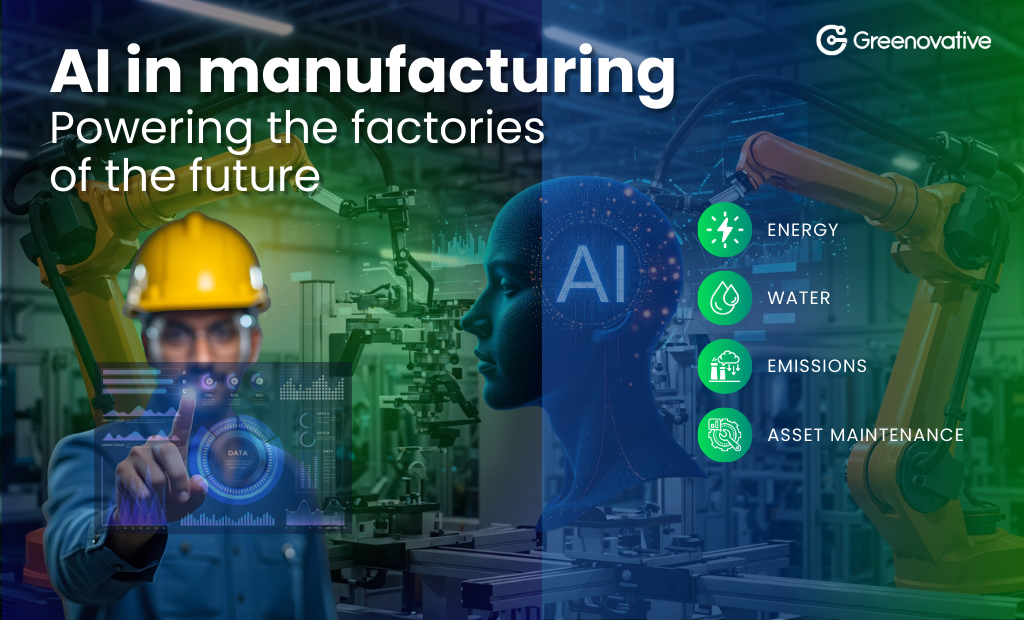
AI in manufacturing: Powering the factories of the future

Manufacturing today is beyond assembly lines and production quotas, it’s a high-stakes, data-driven setup involving hundreds of complex, interconnected processes. From supply chain and quality control to energy management, sustainability initiatives, controlling carbon emissions, and predictive maintenance, modern manufacturing demands more than just human oversight. This is where AI steps in, not as a futuristic luxury, but as a tool for survival and success. For manufacturers looking to stay agile and efficient, adopting a smart AI-powered energy management solution can be a game-changer for their businesses.

Building an edge with AI in the manufacturing industry 

AI is more than just hype, it’s a force multiplier for the modern manufacturing spectrum. It enables manufacturers to unlock greater efficiencies, optimize production, and achieve sustainability in unprecedented ways.

Imagine a production facility powered by AI, where predictive maintenance eliminates costly unplanned outages, where resource allocation is optimized based on predictive energy demands, and where expenses are reduced while achieving sustainable energy transitions. This isn’t a pipe dream now – AI is making this a reality in manufacturing plants globally.

Adoption of AI in sustainable energy management  

AI has redefined the dynamics of manufacturing industry, where software deployment has evolved from digitizing calculation

s to building intelligent, self-optimizing systems that collaborate with humans and adapt in real time. Integration of AI-powered energy management solutions in manufacturing setups can be a silver bullet with a foundation built on trust, experience, and robust security.

The manufacturing industry must recognize AI’s potential to build the factories of the future in the years ahead. Market dominance and competitiveness at home and abroad will be determined by AI proficiency, largely in a trusted and responsible way.

According to the Manufacturing Leadership Council survey report, 57% of the manufacturing companies have initiated piloting and experimenting with AI technology to identify how best it can be applied to better position their operational strategies and future business models.

Deploying sustainable energy analytics and net zero transition solutions across manufacturing units can enable companies achieve enterprise-wide benefits, including energy efficiency, asset health monitoring, demand forecasting, automated inspection, process optimization, and intelligent robotics.

How AI delivers targeted impact in critical production areas 

AI can detect and solve pain points in manufacturing, and can also help businesses achieve complete process automation. For manufacturing companies, energy consumption entails a high proportion of production costs, so deploying sustainable energy analytics solutions for efficacy diagnosis can make energy-saving easier for businesses. Energy efficiency for industries can be achieved with the following solutions powered by AI:

Energy Optimization 

1.Production-Linked Energy Efficiency

Directly ties energy usage to output, revealing true operational efficiency

2. Anomaly Detection

Quickly flags leaks, idle loads, or unexpected spikes, key for preventing waste

3. Prescriptive Insights for Energy Losses

Goes beyond detection, tells you what to fix for tangible savings

4. Automated Energy Saving Actions

Converts insights into real-time action via system integration (BMS/EMS)

Smart Water Monitoring System 

Manufacturers can now harness the power of AI to optimize water utilization and build a robust water infrastructure. Here’s how artificial intelligence is shaping the future of water management and driving sustainability. Remove analytics

1.Real-Time Leak Detection

Identifies hidden leaks or abnormal flows using pattern analysis

2.Usage Benchmarking Across Processes

Compares water usage across lines, shifts, or machines to spot inefficiencies

3.AI-Driven Reuse and Recycling Optimization

Recommends reuse cycles based on quality, volume, and process compatibility

Sustainability and Compliance

Beyond streamlining workflows, switching to net zero transition solutions can yield considerable environmental benefits. Manufacturers can align their energy strategies with carbon footprint reduction goals through actionable insights and smarter source utilization.

1.Anomaly Detection in Emissions and Waste

AI flags unusual spikes or leaks before they breach compliance thresholds

2.Pattern-Based Risk Identification

Learns from historical violations to predict future non-compliance zones

3. Smart Classification of Sustainability Data

Automatically tags and structures unorganized data (e.g., logs, PDFs, CSVs) into ESG/BRSR-ready formats

4. Predictive Compliance Scoring

Calculates the likelihood of non-compliance based on current trends and site behavior

5. KPI Intelligence for Sustainability Goals

AI interprets progress on water, energy, and carbon KPIs, showing if you’re on track or at risk

AI solution designed by experts with firsthand manufacturing experience

Greenovative has developed targeted, high-impact solutions tailored for manufacturers seeking to streamline production, optimize energy consumption, achieve net zero goals, mitigate risks, and cater to dynamic market demands.

Given the importance of energy efficiency for industries, Greenovative has developed AI software with sensible, broadly thought-out frameworks, capitalizing on manufacturers’ years of experience to devise those frameworks.

Why deploy Greenovative’s AI-driven sustainable solutions 

AI-powered energy management solutions can optimize energy consumption in real-time, based on demand and usage patterns. By integrating Greenovative’s net zero transition solutions, manufacturers can unlock carbon-neutral strategies to manage the consumption of critical resources like water and energy.

Today, manufacturers are likely exploring every avenue to streamline workflows, minimize downtime, reduce costs, and optimize resource allocation. Greenovative’s solutions are a powerful force capable of not just incremental improvements, but a complete transformation of your manufacturing processes.

Ready to explore how AI can unlock new levels of efficiency and cost-effectiveness for your manufacturing business? It’s not just about adopting AI, but to rethink what’s possible with the right partner. Click here to schedule a demo or contact our sales team to learn more.

Achieving Net-Zero with Technology: How AI and Automation Drive Carbon Neutrality

Introduction

As the urgency to address climate change intensifies, the concept of achieving a net-zero emissions has emerged as a critical goal for organizations worldwide. Governments, businesses, and industries alike are striving to align with global sustainability targets and ESG mandates. According to the United Nations Framework Convention on Climate Change (UNFCCC), over 70 countries, including major economies like the U.S. and China, have pledged to achieve net-zero emissions by 2050, underscoring the global commitment to this goal. While the road to net-zero is fraught with challenges, advancements in technology, particularly AI and automation, offer powerful tools to accelerate progress. For leaders, the question is not whether to invest in these technologies but how to leverage them effectively to drive carbon neutrality.
This blog explores the pivotal role AI and automation play in enabling organizations to achieve their net-zero ambitions, highlighting actionable strategies, tangible benefits, and future trends.
The Net-Zero Imperative
Achieving net-zero emissions means balancing the greenhouse gases emitted into the atmosphere with those removed, resulting in a net-zero carbon footprint. The stakes are high:

  • Regulatory Pressure: Governments worldwide are enforcing stricter emissions regulations and carbon taxes, as emphasized in the latest IPCC (Intergovernmental Panel on Climate Change) report.
  • Investor and Consumer Demand: According to a 2023 McKinsey report, over 65% of global consumers prefer sustainable products, while institutional investors are increasing scrutiny on ESG compliance.
  • Operational Costs: Research from the International Energy Agency (IEA) highlights that energy inefficiency contributes to over $2 trillion in avoidable costs annually.

For organizations, the challenge lies in transforming operations while maintaining profitability and efficiency. This is where AI and automation provide game-changing solutions.
How AI and Automation Drive Carbon Neutrality

  1. Energy Optimization and Efficiency
    1. Predictive Energy Management: AI analyzes historical energy usage patterns to predict future demands, enabling precise energy allocation and minimizing wastage.
    2. IoT-Enabled Monitoring: Smart sensors and automation systems monitor real-time energy usage, identifying inefficiencies in HVAC systems, production equipment, and utility processes.
    3. Dynamic Load Balancing: AI dynamically adjusts energy consumption across operations based on renewable energy availability, reducing dependence on non-renewable sources. A report from Deloitte highlights that AI-driven energy management can reduce operational energy costs by up to 15%.
  2. Renewable Energy Integration
    1. Forecasting Renewable Energy Output: AI models predict solar and wind energy availability, allowing organizations to optimize energy storage and usage.
    2. Automation in Energy Transitions: Automation ensures seamless transitions between renewable and non-renewable energy sources, maintaining operational stability.
    3. Virtual Power Plants (VPPs): AI-driven VPPs aggregate energy from distributed renewable sources, enabling organizations to maximize renewable energy contributions. According to BloombergNEF, VPP adoption is expected to grow by 40% globally by 2030.
  3. Carbon Emissions Tracking and Reduction
    1. Real-Time Carbon Monitoring: AI tracks emissions across value chains, providing granular insights into emissions hotspots.
    2. Process Optimization: Automation reduces emissions by streamlining energy-intensive operations such as manufacturing, transportation, and logistics.
    3. Carbon Footprint Modeling: AI tools simulate operational changes to evaluate their impact on emissions reduction, as highlighted in a recent WEF (World Economic Forum) sustainability report.
  4. Supply Chain Decarbonization
    1. Sustainable Sourcing: AI identifies suppliers with low-carbon practices, enabling organizations to build greener supply chains.
    2. Route Optimization: Automation optimizes logistics routes to minimize fuel consumption and emissions during transportation. According to Gartner, AI-enabled logistics can reduce transportation emissions by up to 10%.
    3. Lifecycle Assessments: AI assesses the carbon impact of products throughout their lifecycle, supporting sustainable design and end-of-life strategies.
  5. Waste Management and Circular Economy
    1. Smart Waste Sorting: AI-driven automation identifies recyclable materials, reducing landfill contributions and promoting circular practices.
    2. Resource Optimization: AI ensures efficient use of raw materials, minimizing waste during production.
    3. Closed-Loop Systems: Automation supports closed-loop manufacturing processes, enabling reuse and recycling of materials.

Challenges and Barriers to Adoption
While AI and automation present significant opportunities, organizations must address certain barriers:

  • Data Quality and Availability: Incomplete or inaccurate data can hinder the effectiveness of AI models.
  • Integration with Legacy Systems: Retrofitting existing infrastructure with AI and automation requires investment and expertise.
  • Talent and Skills Gap: Organizations must invest in upskilling teams to manage and deploy these technologies effectively.
  • Cybersecurity Concerns: Increased reliance on connected systems and AI raises the risk of cyber threats, as noted by a PwC report on digital resilience.

The Leadership Imperative
For leaders, achieving net-zero with technology requires a strategic and proactive approach:

  1. Define Clear Net-Zero Goals: Establish measurable sustainability targets and align AI and automation initiatives with these objectives.
  2. Invest in Scalable Infrastructure: Build data pipelines, IoT networks, and cloud platforms to support AI and automation deployment.
  3. Foster Collaboration Across Value Chains: Partner with suppliers, logistics providers, and technology experts to drive end-to-end sustainability.
  4. Measure, Refine, and Scale: Continuously monitor the impact of AI-driven initiatives, refine strategies, and scale successful implementations.

Conclusion: Technology as the Catalyst for Net-Zero
Achieving net-zero emissions is one of the most critical challenges of our time, but it also represents a tremendous opportunity for innovation and growth. AI and automation provide the tools to not only meet sustainability targets but also unlock new levels of operational efficiency and resilience. By embracing these technologies, organizations can position themselves as leaders in the global transition to a low-carbon economy.
According to a recent McKinsey study, organizations that leverage advanced technologies in their sustainability strategies see up to a 25% improvement in their carbon reduction timelines. The journey to net-zero begins with bold leadership, strategic investments, and a commitment to leveraging technology for a sustainable future.
Are you ready to take the first step? Click here to schedule a demo or contact our sales team to learn more.

Custom Models: Tailoring AI for Manufacturing Challenges

Introduction

In the manufacturing sector, one-size-fits-all AI solutions often fall short of addressing the nuanced complexities of diverse plants, processes, and workflows. Each manufacturing facility operates with its unique parameters, such as equipment specifications, energy consumption patterns, and operational goals. This diversity demands custom AI models tailored to specific processes and industry requirements. By leveraging domain expertise and specialized data, custom AI models empower manufacturers to optimize operations, enhance decision-making, and achieve operational excellence.

This blog explores how custom AI models are revolutionizing manufacturing by addressing industry-specific challenges and delivering measurable impact.

Why Generic AI Falls Short in Manufacturing

Generic AI solutions often lack the precision and adaptability needed for manufacturing environments. Common limitations include:

  • Limited Process Understanding: Generic AI lacks knowledge of specific manufacturing processes, leading to inaccurate insights.
  • Inconsistent Performance: Standard AI models may not account for varying parameters across production lines, plants, or equipment.
  • Data Irrelevance: Pre-trained models are often built on datasets unrelated to manufacturing, resulting in suboptimal outcomes.

Custom AI models overcome these limitations by aligning AI capabilities with the unique dynamics of manufacturing processes and plants.

Key Benefits of Custom AI Models in Manufacturing

  1. Precision and Relevance
    1. Custom models are trained on plant-specific datasets, ensuring insights tailored to each facility’s unique operational dynamics.
    2. These models adapt to varying process parameters, such as temperature thresholds, machine specifications, and production timelines.
  2. Scalability for Diverse Facilities
    1. Tailored models can scale across multiple manufacturing plants, accommodating their unique configurations and requirements.
    2. The adaptability of custom AI ensures consistent performance across plants with diverse operational setups.
  3. Enhanced Decision-Making
    1. By integrating domain expertise, custom models provide actionable insights for optimizing production workflows.
    2. Predictive analytics helps manufacturers anticipate risks, improve quality control, and reduce downtime.

Applications of Custom AI Models in Manufacturing

  1. Predictive Maintenance:
    1. Custom AI models analyze equipment-specific data to predict failures and recommend maintenance schedules tailored to each machine.
    2. By considering unique equipment parameters, these models minimize downtime and extend asset lifecycle.
  2. Process Optimization:
    1. AI tailors recommendations to improve energy efficiency, reduce waste, and streamline workflows for specific production lines.
    2. Custom models enable real-time adjustments based on process-specific data, such as flow rates, material properties, or machine settings.
  3. Energy Management:
    1. Custom AI models optimize energy consumption based on plant-specific usage patterns and renewable energy availability.
    2. By benchmarking energy performance across facilities, manufacturers can identify inefficiencies and implement targeted improvements.
  4. Quality Assurance:
    1. AI-driven inspection systems adapt to product-specific quality parameters, identifying defects with greater accuracy than generic models.
    2. These systems enable continuous quality monitoring, ensuring product consistency across production runs.

How to Build and Implement Custom AI Models in Manufacturing

  1. Define Plant-Specific Objectives
    1. Collaborate with plant managers and engineers to identify specific operational challenges and goals.
    2. Establish clear metrics for success, such as reduced downtime, improved yield, or energy savings.
  2. Collect and Prepare Relevant Data
    1. Gather high-quality data from sensors, production logs, and equipment monitoring systems.
    2. Ensure data accuracy and relevance by tailoring datasets to specific processes or equipment.
  3. Partner with AI Specialists
    1. Work with AI developers who understand manufacturing processes and can align models with operational goals.
    2. Leverage pre-built frameworks while customizing them to address plant-specific challenges.
  4. Test, Refine, and Scale
    1. Pilot the model on a single production line or facility to validate its performance.
    2. Continuously refine the model based on feedback and extend its deployment across other plants or processes.

Challenges and Considerations

While custom AI models offer immense potential, manufacturers must address key challenges:

  • Data Privacy and Security: Handling sensitive operational data requires robust safeguards to prevent breaches.
  • Integration with Legacy Systems: Retrofitting AI into existing manufacturing infrastructure requires expertise and investment.
  • Talent Gaps: Bridging the gap between AI specialists and manufacturing engineers is critical for building effective models.

The Future of Custom AI Models in Manufacturing
As manufacturing evolves, the demand for custom AI models will continue to grow. Advanced technologies such as federated learning and edge AI will enhance the precision and scalability of these models, enabling manufacturers to address challenges in real-time. By investing in custom AI, manufacturers can drive innovation, achieve operational efficiency, and maintain a competitive edge.

Conclusion: Tailoring AI to Drive Manufacturing Excellence
Custom AI models are no longer optional but essential for manufacturers aiming to address plant-specific challenges and achieve industry-leading performance. By delivering precise, scalable, and actionable insights, these models empower manufacturers to optimize operations, enhance decision-making, and maintain a competitive edge in an increasingly complex industry landscape. For leaders in manufacturing, the path forward lies in embracing AI as a tailored tool for transformation.

Are you ready to unlock the potential of custom AI models? Click here to schedule a demo or contact our sales team to learn more.


Effective Energy Management in Industry: A Path to Efficiency and Sustainability

Introduction

In today’s industrial landscape, energy management is no longer just an operational choice, it is a strategic imperative. With growing pressure to reduce costs, meet regulatory standards, and minimize environmental impact, effective energy management has become a game-changer for modern industries. By leveraging advanced technologies and innovative strategies, organizations can unlock significant cost savings, enhance operational efficiency, and contribute to global sustainability efforts.

This blog delves into what energy management is, its benefits, implementation strategies, and how it drives both efficiency and sustainability in industrial operations.

Understanding Energy Management

What is Energy Management?
Energy management involves systematically monitoring, controlling, and conserving energy within an organization. It’s about optimizing energy usage to improve efficiency, cut costs, and minimize environmental impact. Core steps include conducting energy audits, monitoring consumption, and implementing advanced technologies to reduce wastage.

Why is Energy Management Important Across Industries?
From manufacturing to healthcare, energy management reduces energy consumption, helps meet stringent regulations, and supports ESG commitments. It drives innovation and enhances competitiveness by enabling organizations to operate more sustainably.

A Brief History
Energy management has evolved significantly over the years. While earlier efforts focused primarily on cost reduction, the modern approach integrates sustainability and environmental stewardship, driven by global challenges like the oil crises of the 1970s and the transition to renewable energy in the 21st century.

Current Trends in Energy Management

  1. Technological Advancements: IoT, AI, and advanced data analytics are revolutionizing energy management by enabling real-time monitoring, predictive maintenance, and automated controls.
  2. Regulatory Push: Governments worldwide are introducing stricter energy regulations and incentivizing efficiency, pushing industries to adopt better energy practices.
  3. Corporate Social Responsibility (CSR): Organizations are prioritizing sustainability, with energy management playing a pivotal role in reducing carbon footprints and achieving ESG goals.

The Benefits of Effective Energy Management
According to the International Energy Agency (IEA), energy efficiency improvements could contribute nearly 40% of the carbon emissions reductions needed to meet global climate goals by 2050. A McKinsey report highlights that companies with strong energy management practices achieve cost savings of up to 20% on energy bills while aligning with ESG commitments.

  1. Cost Savings
    Energy management can lead to substantial cost savings by identifying inefficiencies and implementing solutions to optimize energy use. For example, energy audits can uncover hidden inefficiencies, enabling organizations to significantly lower energy bills and allocate resources to strategic areas.
  2. Environmental Impact
    By reducing greenhouse gas emissions and optimizing resource use, energy management helps organizations achieve sustainability targets and combat climate change. This is especially critical as industries strive to align with global frameworks like the Paris Agreement.
  3. Operational Efficiency
    Effective energy management enhances operational efficiency by identifying and eliminating energy wastage in processes such as industrial motors, compressed air systems, and HVAC systems. For instance, streamlining heating systems and adopting predictive maintenance can reduce downtime, improve precision, and enhance overall equipment effectiveness (OEE).

Implementing Energy Management Strategies

  1. Assessing Current Energy Use
    Start with comprehensive energy audits to identify areas of inefficiency and opportunities for improvement. Advanced tools such as AI-powered analytics and IoT devices provide real-time data and actionable insights.
  2. Developing an Action Plan
    Set clear, measurable goals aligned with business objectives and sustainability targets. Collaborate with stakeholders across departments to create a detailed roadmap with defined actions, responsibilities, and timelines.
  3. Investing in Training and Education
    Build a culture of energy awareness by training teams on energy management best practices and keeping them updated on the latest technologies. Empowering operators and engineers with knowledge is critical for long-term success.

Challenges in Energy Management

  1. Resistance to Change
    Implementing new energy strategies often faces resistance from teams accustomed to traditional processes. Overcoming this requires clear communication, leadership involvement, and employee engagement.
  2. Technological Barriers
    Adopting and integrating new technologies can be challenging, particularly in facilities with legacy systems. Ensure robust support and expertise to enable smooth transitions.
  3. Compliance Requirements
    Navigating complex energy regulations requires continuous monitoring and reporting. Advanced energy management platforms simplify compliance by automating data collection and reporting processes.

Energy Management and ESG Goals
Energy management is integral to ESG (Environmental, Social, and Governance) performance. It improves environmental impact by reducing emissions and energy consumption while demonstrating a commitment to responsible business practices. Organizations with robust energy management strategies often see enhanced stakeholder trust and stronger ESG ratings.

The Future of Energy Management

  1. Innovative Technologies
    Emerging tools such as AI, digital twins, and advanced analytics are set to redefine energy management. These technologies enable predictive maintenance, real-time energy optimization, and advanced forecasting, creating a new era of efficiency.
  2. Stronger Regulations and Incentives
    With stricter energy regulations on the horizon, industries must stay ahead by adopting proactive energy strategies. Incentives for energy-efficient practices will further encourage adoption.
  3. Collaboration for Sustainability
    Partnerships with technology providers, suppliers, and industry peers will drive innovation and accelerate the adoption of energy management solutions.

Conclusion
Energy management is no longer a background operation, it is a strategic driver of efficiency, sustainability, and competitiveness. By implementing advanced energy management strategies, organizations can achieve significant cost savings, reduce environmental impact, and enhance operational performance. As regulations tighten and technologies evolve, the importance of energy management will only grow.

Now is the time to act. Embrace energy management and position your organization for a sustainable, efficient future.

Click here to schedule a demo or contact our sales team to learn more.


Empowering the Shop Floor: How Generative AI Simplifies Operations for Everyone

Introduction

In an era of rapid technological advancements, manufacturing and industrial operations face significant challenges on the shop floor. From skill shortages to complex processes, organizations are under constant pressure to maintain productivity while optimizing costs. Generative AI Platform has emerged as a game-changer, simplifying shop floor operations and empowering operators of all skill levels to perform effectively. By automating repetitive tasks, enhancing decision-making, and democratizing knowledge, Generative AI ensures that even less experienced operators can contribute to operational excellence.

This blog explores how Generative AI is transforming shop floor operations, enabling organizations to bridge skill gaps, enhance productivity, and streamline workflows.

Challenges on the Shop Floor
The shop floor presents a unique set of operational challenges:

  • Skill Shortages: High turnover rates and a shrinking pool of skilled operators and engineers make it difficult to sustain operational efficiency.
  • Complex Processes: The need to operate, troubleshoot, and maintain advanced machinery often requires extensive training and expertise.
  • Knowledge Silos: Critical operational knowledge is often confined to a few experienced individuals, making organizations vulnerable to knowledge loss.
  • Manual Errors: Reliance on manual processes increases the risk of errors, impacting quality and productivity.

Generative AI addresses these challenges by augmenting human capabilities, ensuring that even less experienced workers can operate confidently and effectively.

How Generative AI Transforms Shop Floor Operations

  1. Simplifying Complex Operations
    1. AI-Generated Instructions: Generative AI creates easy-to-follow, step-by-step guides for operating and maintaining machinery. These guides can be customized to individual operator skill levels, reducing dependency on highly skilled personnel.
    2. Interactive Troubleshooting: By analyzing data from sensors and logs, Generative AI provides real-time recommendations to resolve equipment issues, minimizing downtime.
    3. Visual and Augmented Reality Support: AI-powered augmented reality (AR) overlays offer visual instructions for tasks such as equipment assembly, calibration, or repair.
  2. Democratizing Knowledge
    1. Automated Knowledge Capture: Generative AI captures and documents best practices, ensuring institutional knowledge is preserved and accessible.
    2. On-Demand Training: AI-generated training modules simulate operational scenarios, enabling new hires to learn quickly and effectively.
    3. Real-Time Assistance: AI chatbots and virtual assistants provide instant answers to operational queries, empowering workers to make informed decisions.
  3. Enhancing Decision-Making
    1. Predictive Analytics: Generative AI leverages historical data to predict potential issues, enabling proactive maintenance and reducing unplanned downtime.
    2. Dynamic Resource Allocation: AI optimizes resource allocation, such as energy and materials, to align with production schedules.
    3. Anomaly Detection: AI continuously monitors operations, flagging anomalies and recommending corrective actions before they escalate.
  4. Streamlining Repetitive Tasks
    1. Automating Documentation: Generative AI automates report generation for maintenance logs, production performance, and compliance requirements.
    2. Quality Control Automation: AI inspects products in real-time, identifying defects with higher accuracy than manual inspections.
    3. Workflow Optimization: AI suggests process improvements by analyzing workflow bottlenecks and optimizing task sequencing.

Benefits for Shop Floor Teams
Generative AI brings transformative benefits to shop floor teams:

  • Empowering Less Skilled Operators: Simplifies operations and provides real-time guidance, enabling less experienced workers to perform confidently.
  • Minimized Downtime: Predictive insights and automated troubleshooting reduce delays caused by equipment failures.
  • Increased Productivity: By automating repetitive tasks, workers can focus on higher-value activities.
  • Improved Knowledge Retention: Capturing and sharing operational knowledge ensures continuity despite team of operators and engineers turnover.

Case Study: Generative AI in Action
A leading automotive manufacturer implemented Generative AI on its shop floor to address skill gaps and operational inefficiencies. Key results included:

  • A 25% reduction in downtime due to AI-powered predictive maintenance.
  • A 30% improvement in onboarding speed for new hires through AI-generated training modules.
  • Significant cost savings by automating quality inspections and reducing material waste.

Challenges and Considerations
While Generative AI offers immense potential, organizations must navigate certain challenges:

  • Integration with Existing Systems: Retrofitting AI into legacy systems requires investment and expertise.
  • Data Quality and Availability: High-quality data is essential for AI to generate accurate insights and recommendations.
  • Change Management: Encouraging workers to adopt AI tools requires training and clear communication of benefits.
  • Cybersecurity Risks: Increased reliance on AI-driven systems necessitates robust cybersecurity measures.

Conclusion: Generative AI as a Shop Floor Enabler
Generative AI represents a paradigm shift in shop floor operations, empowering organizations to overcome workforce challenges, improve productivity, and achieve operational excellence. By simplifying complex tasks, democratizing knowledge, and automating workflows, Generative AI ensures that shop floors remain efficient and resilient, regardless of workforce skill levels.

For leaders, the time to act is now. Embracing Generative AI not only prepares organizations for the future of work but also positions them as pioneers in operational innovation.

Are you ready to transform your shop floor? Click here to schedule a demo or contact our sales team to learn more.

Energy Efficiency: A Cornerstone in the Journey to Sustainability

Introduction

As the global community intensifies its efforts to combat climate change, energy efficiency has emerged as one of the most impactful and actionable strategies to achieve sustainability goals. According to the International Energy Agency (IEA), improving energy efficiency alone could contribute to over 40% of the carbon emissions reductions needed to meet global climate targets by 2050. Energy efficiency not only reduces energy consumption but also minimizes environmental impact, conserves resources, and enhances operational performance.

While digital transformation serves as an enabler for optimizing energy usage, the fundamental role of energy efficiency in reducing carbon footprints and driving the transition toward a net-zero future cannot be overstated. This blog explores how energy efficiency is a cornerstone of sustainability, supported by data, global examples, and actionable insights.

Energy Efficiency: The First Step to Net-Zero
Energy efficiency offers a direct and measurable way to reduce carbon emissions, often referred to as the “low-hanging fruit” in the sustainability journey. Here’s why it matters:

  • Carbon Emissions Reduction: Studies from the IEA reveal that energy efficiency improvements have reduced global energy-related CO2 emissions by nearly 10% over the past two decades. Scaling these efforts is critical for achieving net-zero goals.
  • Cost Savings: Energy-efficient systems reduce operational costs, improving profitability while aligning with sustainability objectives.
  • Resource Conservation: Consuming less energy reduces the strain on natural resources and minimizes environmental degradation.

The Link Between Energy Efficiency and Sustainability
Energy efficiency contributes to sustainability in several ways:

  1. Reducing Carbon Footprints: Efficient energy usage directly reduces greenhouse gas emissions, helping organizations align with global climate agreements such as the Paris Accord.
  2. Supporting Renewable Energy Integration: By optimizing energy use, organizations can balance energy demands with renewable energy sources, maximizing the impact of clean energy investments.
  3. Enhancing Operational Resilience: Energy-efficient processes are less vulnerable to fluctuations in energy supply or pricing, supporting long-term operational stability.

Global Success Stories

  1. European Union: According to the European Commission, improved energy efficiency measures in buildings and industries have reduced energy consumption by 20% since 2005, saving over $200 billion in energy costs annually.
  2. Japan: The Ministry of Economy, Trade, and Industry (METI) highlights how Japan’s energy efficiency programs in manufacturing have reduced energy consumption by 15% over a decade.
  3. United States: A report by the American Council for an Energy-Efficient Economy (ACEEE) found that energy efficiency measures across U.S. industrial sectors prevented the emission of 2.3 billion tons of CO2 between 2000 and 2020.

The Role of Digital Transformation
Digital transformation acts as a catalyst for achieving energy efficiency. Advanced technologies such as IoT, AI, and data analytics enhance energy monitoring and optimization efforts. However, these tools are enablers—the core impact comes from implementing energy-efficient practices and systems.

  1. Real-Time Monitoring: IoT sensors provide granular visibility into energy usage across equipment, processes, and facilities.
  2. Predictive Insights: AI-driven analytics predict energy demands and identify inefficiencies, enabling proactive interventions.
  3. Benchmarking and Optimization: Digital platforms enable organizations to compare energy performance across facilities and track progress toward efficiency targets.

Challenges in Scaling Energy Efficiency
Despite its benefits, scaling energy efficiency faces certain challenges:

  • Upfront Costs: Energy-efficient systems often require initial investments that may deter organizations.
  • Integration Issues: Retrofitting legacy systems with energy-efficient technologies demands expertise and resources.
  • Awareness and Training: Promoting a culture of energy efficiency within organizations requires leadership and continuous training efforts.

Key Steps to Drive Energy Efficiency for Sustainability

  1. Conduct Energy Audits: Begin by assessing current energy consumption patterns and identifying inefficiencies.
  2. Invest in Efficient Systems: Upgrade to energy-efficient equipment, lighting, and HVAC systems.
  3. Leverage Digital Tools: Use IoT and AI technologies to monitor, analyze, and optimize energy usage.
  4. Set Clear Goals: Establish measurable energy efficiency targets aligned with sustainability objectives.
  5. Engage Stakeholders: Educate teams and collaborate with suppliers to integrate energy-efficient practices across the value chain.

Conclusion: Energy Efficiency as a Pillar of Sustainability
Energy efficiency is more than just a cost-saving measure—it is a critical pathway to achieving global sustainability and climate goals. By reducing energy consumption, organizations not only minimize their carbon footprints but also build resilience, improve profitability, and contribute to a greener future. Global success stories underline the transformative potential of energy efficiency, and with the support of digital transformation, these efforts can be scaled and sustained.

For leaders, prioritizing energy efficiency is a powerful statement of commitment to sustainability. The time to act is now—invest in energy efficiency and pave the way for a sustainable tomorrow.

Click here to schedule a demo or contact our sales team to learn more.

ESG Data Analytics: How Organizations Can Make Their Sustainability Efforts Measurable

Introduction

As environmental, social, and governance (ESG) criteria become central to business operations, organizations are increasingly required to measure, track, and report their sustainability efforts. Investors, regulators, and consumers demand transparency and accountability, making ESG data analytics a critical tool for organizations to demonstrate their commitment to sustainability. For industries such as manufacturing and energy-intensive operations, ESG data analytics plays an even more significant role in ensuring compliance, optimizing operations, and achieving long-term sustainability goals.

This blog explores how ESG data analytics empowers organizations to quantify their sustainability initiatives, streamline compliance, and enhance decision-making, all while aligning with global sustainability standards.

The Tangible Role of ESG Data Analytics

  1. Tracking Emissions and Resource Usage with Precision
    • Granular Insights: IoT-enabled sensors provide precise, real-time data on energy consumption, emissions, and water usage at equipment, process, and facility levels. For example, a manufacturing plant can monitor its energy consumption per production unit and track how it impacts its carbon footprint.
    • Carbon Accounting: ESG platforms calculate emissions according to frameworks like the Greenhouse Gas (GHG) Protocol, ensuring accuracy in Scope 1, 2, and 3 emissions reporting. Organizations like Siemens have adopted such tools to achieve precise carbon tracking across their operations.
    • Water Usage Optimization: Data analytics tracks water usage trends, helping identify inefficiencies and enabling process adjustments to conserve resources.
  2. Simplifying Compliance and Reporting
    • Automated Reporting: ESG platforms integrate seamlessly with existing energy management systems to automate reporting for compliance frameworks such as ISO 14064 and ISO 50001.
    • Regulatory Alerts: Analytics tools notify teams of deviations from compliance thresholds, allowing immediate corrective actions. For instance, real-time alerts for emissions exceeding allowable limits can prevent regulatory penalties.
    • Audit Readiness: Historical data storage and streamlined visualization ensure organizations can respond to audits with minimal effort while maintaining transparency.
  3. Driving Operational Efficiency Through Benchmarks
    • Facility Comparisons: ESG analytics platforms benchmark energy efficiency across multiple facilities, identifying underperforming plants and processes. For example, a global manufacturer reduced its energy consumption by 15% by benchmarking and replicating best practices from its highest-performing site.
    • Waste Reduction: Data analytics highlights inefficiencies in material usage and waste generation, enabling manufacturers to adopt circular economy principles such as recycling and reuse.
    • Energy Optimization: Predictive analytics optimizes equipment schedules, ensuring that energy is consumed during off-peak hours when costs and emissions are lower.
  4. Enhancing Decision-Making
    • Scenario Simulations: AI-driven models simulate the impact of operational changes, such as adopting renewable energy sources or modifying production processes, to guide decision-making.
    • Proactive Risk Management: ESG analytics identifies risks related to supply chain sustainability, energy pricing volatility, and regulatory shifts, allowing businesses to adapt strategies proactively.
    • Custom KPI Dashboards: Organizations can create tailored ESG key performance indicator (KPI) dashboards to track progress on goals such as emissions reductions, water savings, and energy efficiency.

Case Studies: ESG Data Analytics in Action

  1. Energy Efficiency in Manufacturing: A global electronics manufacturer used ESG data analytics to track energy usage across production lines, achieving a 12% reduction in energy consumption and compliance with ISO 50001 standards.
  2. Supply Chain Transparency: A leading automotive company implemented analytics tools to assess supplier sustainability metrics, ensuring alignment with Scope 3 emissions goals. This initiative reduced its supply chain emissions by 18% over three years.
  3. Carbon Neutrality Progress: A cement manufacturer utilized ESG analytics to simulate the adoption of alternative fuels, reducing its carbon footprint by 20% while maintaining production output.

Challenges to ESG Data Analytics Implementation
While ESG data analytics offers significant benefits, its implementation is not without hurdles:

  • Data Integration: Combining siloed data from legacy systems with modern analytics platforms requires investment and expertise.
  • Accuracy and Consistency: Ensuring high-quality data input is essential for reliable ESG reporting and actionable insights.
  • Cost of Deployment: Advanced ESG analytics systems demand financial resources for deployment, customization, and maintenance.
  • Cross-Functional Collaboration: Aligning stakeholders across operations, compliance, and sustainability teams is critical to successful implementation.

Actionable Steps to Adopt ESG Data Analytics

  1. Define Measurable ESG Goals: Establish clear objectives, such as emissions reduction targets or water conservation goals, and align them with global standards like the Science-Based Targets initiative (SBTi).
  2. Invest in Scalable Technology: Deploy IoT sensors, cloud platforms, and analytics tools to ensure seamless data collection and processing.
  3. Collaborate with Experts: Partner with technology providers and ESG consultants to design tailored solutions that fit your industry and operational needs.
  4. Pilot and Scale: Begin with pilot projects to validate the effectiveness of ESG analytics tools and refine strategies before scaling across the organization.
  5. Monitor Progress Continuously: Use real-time dashboards to track KPIs, address inefficiencies, and ensure compliance with evolving regulations.

Conclusion: Quantifying Sustainability with ESG Analytics
ESG data analytics empowers organizations to move beyond vague sustainability statements by providing tangible, measurable insights into their environmental, social, and governance efforts. By leveraging advanced tools, manufacturers can reduce emissions, optimize resource usage, and ensure compliance with global sustainability standards.

For organizations ready to embrace ESG data analytics, the rewards go beyond compliance. These tools drive operational efficiency, build stakeholder trust, and position companies as leaders in sustainability. Are you prepared to make your sustainability efforts measurable and impactful?

Click here to schedule a demo or contact our sales team to learn more.

Maximizing Utility Efficiency: Unlocking Savings Without Core Process Changes

Introduction

Operational efficiency is a critical driver of profitability and sustainability for industrial organizations. While most efficiency initiatives focus on improving core production processes, significant gains can be achieved by optimizing utilities such as energy, water, compressed air, and HVAC systems. These utility systems often operate in the background, but their impact on costs, resource consumption, and environmental sustainability is substantial. By focusing on utilities, organizations can enhance efficiency without disrupting their core processes, ensuring smooth operations while driving measurable improvements.

This blog explores strategies to optimize utilities and highlights how advanced technologies enable organizations to reduce costs, conserve resources, and align with sustainability goals.

The Importance of Utility Optimization
According to a report by the International Energy Agency (IEA), improved utility efficiency could reduce global energy demand by nearly 10% by 2030, significantly contributing to carbon emissions reductions. Additionally, a World Economic Forum study highlights that utility optimization efforts in industrial sectors could save businesses over $600 billion annually while aligning with global sustainability goals.
Utilities form the backbone of industrial operations, providing the energy, water, and resources needed to power equipment and maintain optimal environmental conditions. Key reasons to prioritize utility optimization include:

  • Cost Savings: Utility systems account for up to 30% of operational costs in many industries. Optimizing these systems can significantly reduce expenditures.
  • Sustainability Goals: Efficient utilities contribute to reducing carbon footprints, aligning operations with global sustainability initiatives.
  • Operational Resilience: Optimized utility systems ensure reliability, reducing downtime caused by utility-related failures.

Key Areas for Utility Optimization

  1. Energy Management
  2. Water Management
  3. Compressed Air Systems
    • Leak Prevention: Use automated monitoring systems to detect leaks in compressed air systems, which can account for up to 30% of system inefficiencies.
    • Pressure Optimization: Maintain optimal pressure levels to minimize energy consumption while ensuring adequate performance.
    • Smart Controls: Implement intelligent control systems to adjust airflow based on real-time demand.
  4. HVAC Optimization
    • Smart Thermostats: Use AI-powered thermostats to automatically adjust temperatures based on occupancy and ambient conditions.
    • Ventilation Efficiency: Optimize airflow systems to maintain air quality while reducing energy consumption.
    • Maintenance Alerts: Predictive maintenance tools identify potential HVAC issues before they escalate, reducing downtime and repair costs.

How Technology Enables Utility Optimization

  1. IoT Sensors for Real-Time Monitoring
    • IoT devices provide granular visibility into utility usage across facilities, enabling organizations to identify inefficiencies immediately.
    • Real-time data collection ensures that anomalies, such as leaks or energy spikes, are addressed proactively.
  2. AI-Driven Analytics
    • Predictive analytics models forecast utility demands and recommend adjustments to improve efficiency.
    • AI tools enable dynamic adjustments to energy, water, and air systems based on production schedules and operational needs.
  3. Centralized Utility Management Platforms
    • Digital platforms consolidate data from utility systems, providing a unified view of resource consumption across facilities.
    • Benchmarking tools allow organizations to compare utility performance across sites and implement best practices.

Case Studies: Real-World Applications of Utility Optimization

  1. Energy Recovery in Manufacturing: A global steel manufacturer implemented waste heat recovery systems, reducing energy costs by 18% and lowering emissions by 25%.
  2. Water Reuse in Automotive Plants: An automotive manufacturer installed water recycling systems, achieving a 40% reduction in water consumption across its facilities.
  3. Compressed Air Monitoring in Food Processing: A food processing plant used IoT-enabled compressed air monitoring systems, reducing energy waste by 22% through leak detection and pressure optimization.

The Benefits of Utility Optimization
Optimizing utilities delivers a range of benefits, including:

  • Lower Operational Costs: Reduced energy and resource consumption leads directly to cost savings.
  • Improved Sustainability: Utility optimization contributes to ESG goals by minimizing waste and emissions.
  • Enhanced Reliability: Proactive maintenance and real-time monitoring reduce downtime and ensure consistent utility performance.
  • Scalability: Optimized utility systems can easily adapt to changes in production demands, ensuring long-term operational resilience.

Actionable Steps for Organizations

  1. Conduct Utility Audits: Identify inefficiencies and prioritize optimization opportunities across energy, water, compressed air, and HVAC systems.
  2. Invest in Smart Technology: Deploy IoT sensors, AI analytics, and centralized platforms to monitor and manage utilities effectively.
  3. Set Clear Goals: Align utility optimization efforts with measurable objectives, such as cost reductions or emissions targets.
  4. Collaborate Across Teams: Engage stakeholders from operations, maintenance, and sustainability teams to drive initiatives.
  5. Continuously Monitor and Refine: Use data-driven insights to refine optimization strategies and scale successful implementations.

Conclusion: Unlocking Efficiency Through Utility Optimization
Utility systems represent a significant opportunity for organizations to drive efficiency and sustainability without disrupting core production processes. By leveraging advanced technologies and focusing on key areas such as energy, water, compressed air, and HVAC systems, organizations can achieve measurable improvements in cost savings, resource conservation, and operational reliability.

In an increasingly competitive and sustainability-focused world, optimizing utilities is not just a smart strategy—it’s a necessity. For leaders, the path to operational excellence starts with taking a closer look at the systems that power their operations. Are you ready to unlock the potential of utility optimization?

Click here to schedule a demo or contact our sales team to learn more.