







Client & Context
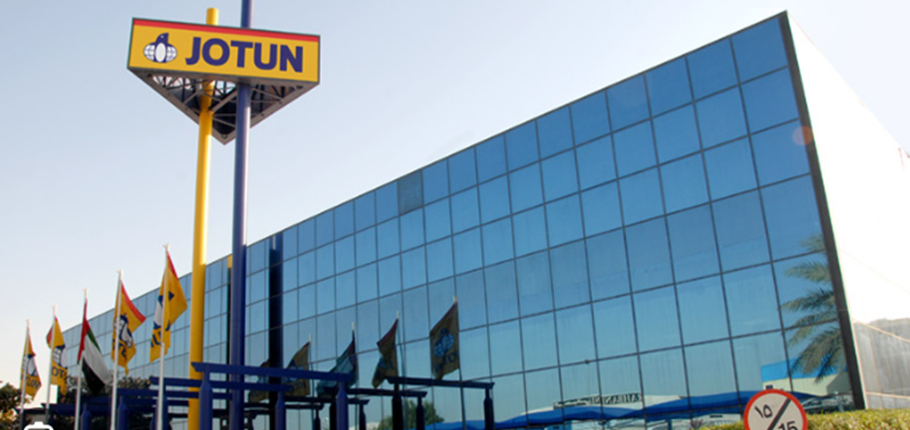
Jotun is a Norway-headquartered global manufacturer of decorative paints, marine coatings, protective coatings, and powder coatings. Founded in 1926, the company operates 40+ production facilities across approximately 25 countries, serving customers in over 100 markets worldwide. The group generates annual revenues in excess of NOK 30 billion, supported by a geographically distributed manufacturing footprint.
Across South Asia, the Middle East, and North Africa, Jotun operates multiple factories producing diverse product technologies including water-based, solvent-based, and powder-based coatings. Each plant manufactures different combinations of SKUs in varying batch sizes, volumes, and process configurations.
At this scale, manufacturing performance is not determined by individual factories alone. It depends on how effectively the group compares, allocates, and optimizes production across regions while maintaining cost efficiency and operational excellence.
Business Problem
At the group level, leadership lacked a reliable answer to three critical questions:
- Which factory is the most energy-efficient for a given product category?
- Which processes and equipment define best-in-class performance within the group?
- How should regional production planning factor energy efficiency alongside delivery timelines, capacity, and availability?
Although energy monitoring systems existed at individual plants, they operated in isolation. There was no common baseline for comparing energy performance across factories, products, or SKUs. As a result, production planning decisions were made without energy intelligence, leading to hidden inefficiencies and avoidable cost variance across regions.
Approach
Unified Data Layer Across Plants
Greenovative was deployed across manufacturing facilities in India, Oman, UAE, Saudi Arabia, Qatar, and Egypt, integrating energy and production data into a single, standardized model across geographies.
Product-Level Energy Baselining
Using historical operating data, Greenovative established energy baselines at equipment, process, and plant levels, mapped directly to product categories (water-based, solvent-based, powder-based) and underlying SKUs—normalized for batch size and throughput.
Cross-Factory Benchmarking
With consistent baselines in place, energy performance was benchmarked like-for-like across factories for the same product category, enabling objective comparison of machines, processes, and plants at different production volumes.
Prescriptive Intelligence for Production Planning
Greenovative’s AI layer learned how product mix, batch size, and operating conditions influenced energy outcomes and surfaced this intelligence to the central command team making energy efficiency a direct input into regional production allocation decisions.
Results / Impact
- 18–20% improvement in group-level energy performance, driven by better production allocation and reduced process inefficiencies
- Clear identification of best-in-class factories, processes, and equipment for each product category
- Reduction in hidden losses caused by sub-optimal batch sizing, equipment loading, and utility operation
- Energy performance became predictable and repeatable, rather than dependent on local practices
Strategic Insight
- In multi-plant manufacturing networks, energy efficiency cannot be evaluated in isolation at plant level. It must inform cross-factory production allocation.
- Objective, like-for-like benchmarking across product categories enables leadership to identify where value is truly created within the network.
- Embedding energy intelligence into production planning transforms it from a reporting metric into a strategic allocation lever.
This demonstrates how Greenovative enables global manufacturers like Jotun to convert distributed operations into a coordinated, energy-optimised enterprise system.