







Client & Context
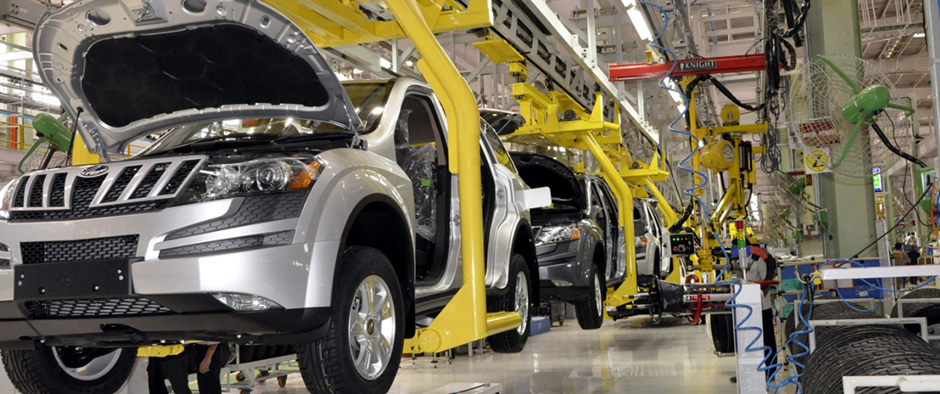
A leading Indian automotive and industrial conglomerate with operations spanning SUVs, commercial vehicles, tractors, engines, farm equipment, and defense manufacturing.
The group operates 70+ manufacturing plants globally and manages an annual energy spend exceeding ₹3,000 crore, making energy performance a critical lever for manufacturing economics.
Since 2021, the organization has treated energy intelligence as a strategic capability, evolving it alongside production scale, product mix, and operational complexity—rather than as a compliance-driven function.
Business Problem
Early digitisation delivered visibility, but it also revealed a structural limitation.
Dashboards showed where energy was being consumed, but could not explain why performance varied across shifts, production schedules, or utilities. Energy behaviour was tightly linked to production planning and utility operation, yet these systems operated in parallel rather than as a unified decision framework.
As deployment expanded across plants, the central team recognised that monitoring alone would not translate into consistent cost outcomes. The core question evolved beyond reporting.
What actions will actually reduce energy cost across production and utilities, not just describe consumption?
Approach
The engagement evolved in deliberate stages, with Greenovative acting as the intelligence layer across the journey.
The initial phase focused on eliminating manual, person-driven reporting. IoT gateways were deployed at major load centres, enabling automated, real-time capture of energy, water, and compressed air data. This established a single, reliable source of truth at the plant level and reduced dependence on manual logs and individual expertise.
As confidence in data quality grew, the scope expanded downstream. Energy data was integrated with production systems through PLC integration and SAP, linking consumption directly to operating context and output. This enabled real-time tracking of Specific Energy Consumption, allowing performance deviations to be explained in terms of production behaviour rather than abstract trends.
With a stable digital foundation in place, Greenovative introduced its prescriptive AI layer to move the program from visibility to action. The system was trained using several years of historical operating data from the group’s largest manufacturing plant, allowing it to learn how production schedules, utilities, and energy demand interacted under real operating conditions.
This learning formed the baseline for prescribing concrete operating actions across both production-linked energy usage and utility systems such as compressors, chillers, and other support infrastructure. Recommendations were validated before being positioned for replication across additional plants.
Results / Impact
- ₹3+ crore in savings opportunities identified by the prescriptive layer and converted into actionable operating recommendations.
- Utility optimisation emerged as a major value lever, addressing idle-time losses, part-load inefficiencies, and suboptimal operating schedules across support utilities.
- Production-linked recommendations stabilised energy intensity across shifts
Energy management shifted from monitoring performance to actively improving it. - Decisions became consistent across plants and less dependent on individual judgement, creating a repeatable operating model rather than isolated improvements.
Strategic Insight
- Monitoring creates visibility. It does not create savings.
- Energy value is unlocked only when decisions change at production and utility level.
- Prescriptive intelligence ensures actions are consistent across plants, not person-dependent.
- Enterprise-scale impact comes from standardised decision logic, not isolated plant improvements.
- This establishes Greenovative as the intelligence layer that makes enterprise-wide energy optimisation measurable, enforceable, and repeatable.